Chapter 44 of 50
The Man in the Velvet Mask
“I swear I way more than half believe it when I say,That somewhere love and justice shineCynicism falls asleep,Tyranny talks to itself.”
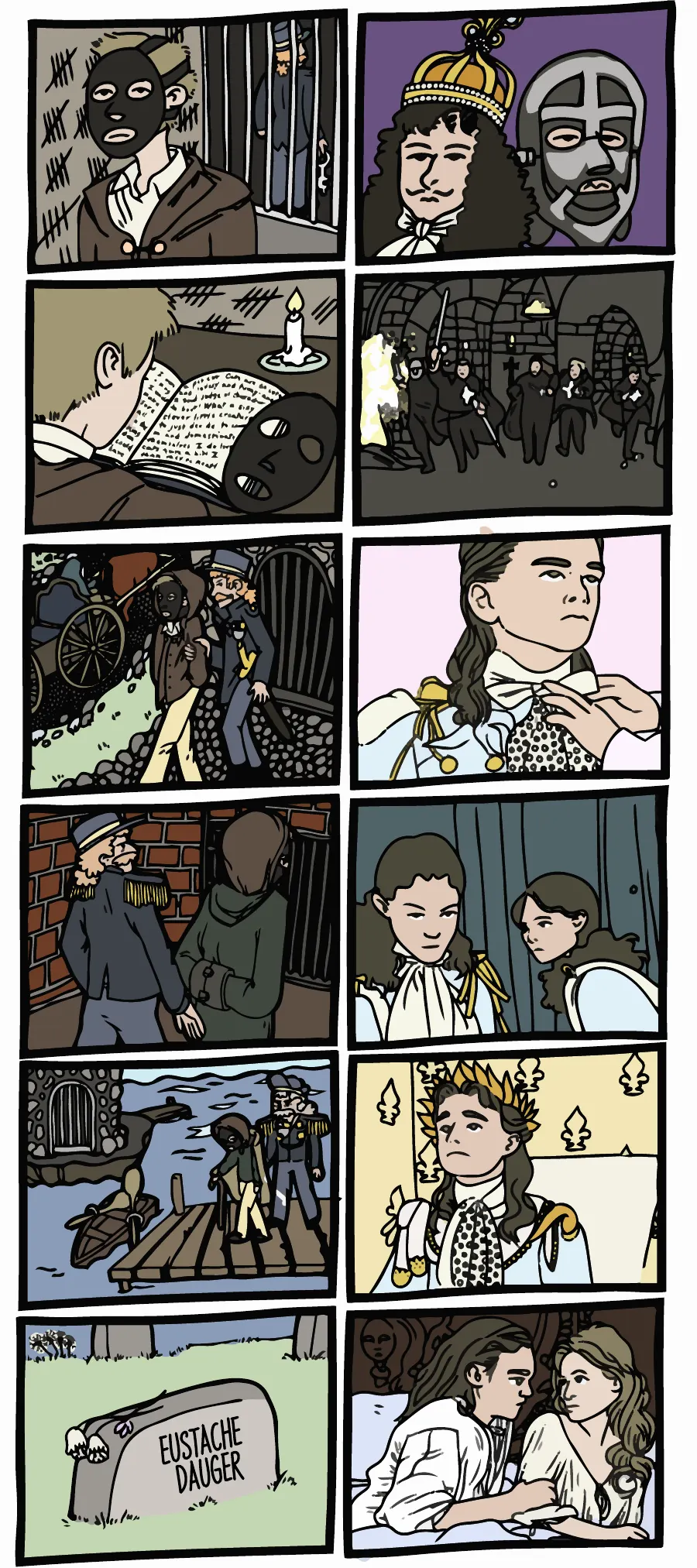
The prisoner known as “Eustache Dauger” remained in state custody for thirty-four years (1669–1703) under extraordinary protocols of secrecy. His confinement spanned four locations under the continuous supervision of a single jailer, Bénigne Dauvergne de Saint-Mars. Official correspondence reveals exceptional measures: a specially constructed cell with sound isolation, strict limitations on communication, and a requirement to wear a black velvet mask when visible to anyone outside Saint-Mars’s control. The prisoner served as valet to another detainee at Pignerol before eventual transfer to the Bastille, where he died and was buried under the alias “Marchioly.”
Topics
- Man in the Iron Mask
- Eustache Dauger Mystery
- Lettres de Cachet
- Saint-Mars Custody
- Velvet Not Iron
- Administrative Erasure
- Voltaire & Dumas Myths
- Bastille Symbol
- Revolutionary Icon
- Arbitrary Detention
- Historical Void
Sidenote
The Man in the Iron Mask: The real prisoner — Eustache Dauger — wore a velvet mask, not iron, and was transferred discreetly between prisons under heavy secrecy. He died unknown. In contrast, fiction (notably Dumas’s The Man in the Iron Mask, 1849) transformed him into a hidden twin of Louis XIV, masked in iron, rescued by musketeers, and restored to royal life. The left column shows archival history; the right, its mythologized media version.